



- Cisco Anyconnect 2fa Microsoft Authenticator
- Cisco Anyconnect 2fa Sms
- 2fa Cisco Anyconnect Login
- Cisco Anyconnect Download
- Cisco Anyconnect 2fa Options
Why is multi-factor authentication needed?
As organizations digitize operations and take on greater liability for storing customer data, the risks and need for security increase. Because attackers have long exploited user login data to gain entry to critical systems, verifying user identity has become essential.
Authentication based on usernames and passwords alone is unreliable and unwieldy, since users may have trouble storing, remembering, and managing them across multiple accounts, and many reuse passwords across services and create passwords that lack complexity. Passwords also offer weak security because of the ease of acquiring them through hacking, phishing, and malware.
What are examples of multi-factor authentication?
- Push-based 2FA It confirms a user's identity with multiple factors of authentication that other methods cannot. Because push-based 2FA sends notifications through data networks like cellular or Wi-Fi, users must have data access on their mobile devices to use the 2FA functionality.
- Jul 06, 2019 I use Cisco AnyConnect too although I imagine the problem is common to most VPN clients. Like @haselton I'm unable to use OpenConnect as the company I work for enforces 2FA. @craigloewen-msft - I'd dearly love to send you some logs but our workstation diagnostic data settings are locked down by Group Policy.
Push-based 2FA It confirms a user's identity with multiple factors of authentication that other methods cannot. Because push-based 2FA sends notifications through data networks like cellular or Wi-Fi, users must have data access on their mobile devices to use the 2FA functionality.
The most common example of MFA is the process for using an ATM at a bank. To gain access to their accounts, users must insert a bank card (a physical factor) and enter a PIN (a knowledge factor).
Another familiar example is the time-based one-time password (TOTP) method, used by financial institutions and other large enterprises to secure workflows, applications, and accounts. Upon requesting login, users are asked to provide a temporary passcode that has been sent via a text message, phone call, or email.
How does multi-factor authentication work?
MFA requires means of verification that unauthorized users won't have. Since passwords are insufficient for verifying identity, MFA requires multiple pieces of evidence to verify identity. The most common variant of MFA is two-factor authentication (2FA). The theory is that even if threat actors can impersonate a user with one piece of evidence, they won't be able to provide two or more.
Proper multi-factor authentication uses factors from at least two different categories. Using two from the same category does not fulfill the objective of MFA. Despite wide use of the password/security question combination, both factors are from the knowledge category--and don't qualify as MFA. A password and a temporary passcode qualify because the passcode is a possession factor, verifying ownership of a specific email account or mobile device.
Is multi-factor authentication complicated to use?
Multi-factor authentication introduces an extra step or two during the login process, but it is not complicated. The security industry is creating solutions to streamline the MFA process, and authentication technology is becoming more intuitive as it evolves.
For example, biometric factors like fingerprints and face scans offer fast, reliable logins. New technologies that leverage mobile device features like GPS, cameras, and microphones as authentication factors promise to further improve the identity verification process. Simple methods like push notifications only require a single tap to a user's smart phone or smart watch to verify their identity.
How do organizations start using MFA?
Many operating systems, service providers, and account-based platforms have incorporated MFA into their security settings. For single users or small businesses, using MFA is as simple as going to settings for operating systems, web platforms, and service providers and enabling the features.
Larger organizations with their own network portals and complex user-management challenges may need to use an authentication app like Duo, which adds an extra authentication step during login.
How do MFA and single sign-on (SSO) differ?
MFA is a security enhancement, while SSO is a system for improving productivity by allowing users to use one set of login credentials to access multiple systems and applications that previously may have each required their own logins.
While SSO works in conjunction with MFA, it does not replace it. Companies may require SSO--so corporate email names are used to log in--in addition to multi-factor authentication. SSO authenticates users with MFA and then, using software tokens, shares the authentication with multiple applications.
What is adaptive authentication?
In adaptive authentication, authentication rules continuously adjust based on the following variables:
- By user or groups of users defined by role, responsibility, or department
- By authentication method: for example, to authenticate users via push notification but not SMS
- By application: to enforce more secure MFA methods--such as push notification or Universal 2nd Factor (U2F)--for high-risk applications and services
- By geographic location: to restrict access to company resources based on a user's physical location, or to set conditional policies restricting use of certain authentication methods in some locations but not others
- By network information: to use network-in-use IP information as an authentication factor and to block authentication attempts from anonymous networks like Tor, proxies, and VPNs
SF State provides a secure VPN for faculty and staff to access protected on-campus resources.
- VPN Access Control and Authorization (VPN Management)
Please note, this document pertains to the new GlobalProtect VPN service implemented June 5th, 2020. If you experience issues or discover a previously available service is not accessible via VPN, please report the issue to service@sfsu.edu.
When to use VPN
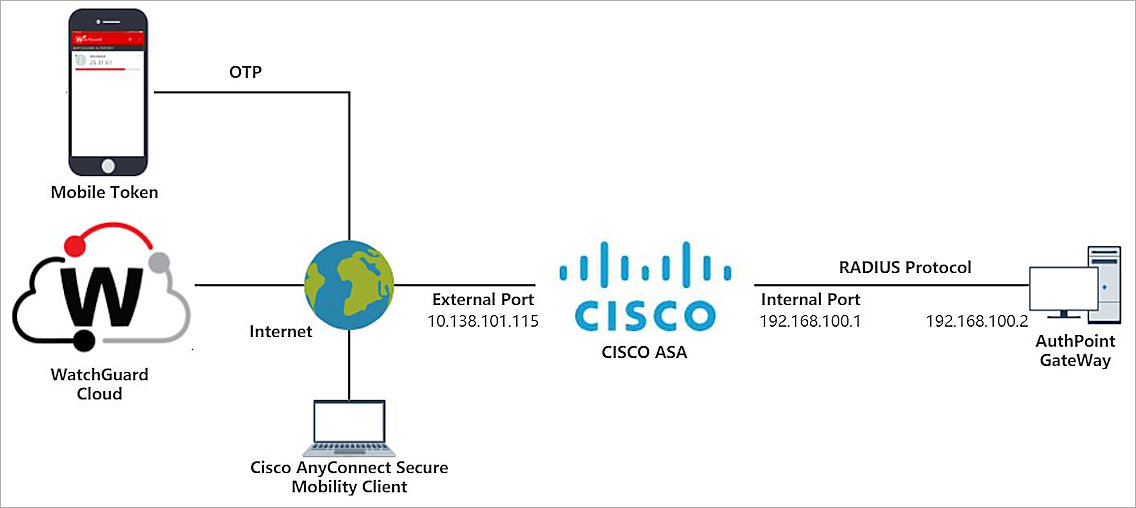
SF State’s VPN has two purposes: It enables campus users to send and receive data across a public network as if their device is directly connected to the campus network, and adds Two-Factor Authentication (2FA) for high security services. VPN is needed:
- When accessing a service restricted to use on campus networks or subnets. Examples: Departmental shares/servers, OnBase, Appworx, Windows/Office authentication, and Active Directory access
- When accessing services that store Level 1 data (two-factor authentication required). Example: Departmental secure shares
- When administering servers/applications. Examples: SSH, Oracle, and server maintenance
- By PeopleSoft developers with privileged access
VPN can be installed on personal computers, but if you are planning on accessing Level 1 data, the following security requirements must be in place:
- All devices used (e.g., laptops, desktops, tablets, mobile devices) are at current patching levels and have anti-malware installed/enabled with no active virus infections or malware
- Users must connect to Level 1 data using Two-Factor Authentication (2FA) and VPN only
- Devices are configured to lock after 15 minutes of inactivity
- Level 1 data does not get sent/downloaded to locations outside of existing approved Level 1 data repositories (e.g., PeopleSoft applications such as Common Financial System (CFS), Campus Solutions (CS), and Human Resources (HR); OnBase; Secure File Shares; Student Health Services (SHS) systems)
Cisco Anyconnect 2fa Microsoft Authenticator

NOTE: Before VPN access is granted, completion of the Data Security and FERPA annual training is required and will be validated.
VPN Security Groups
Current faculty and staff are automatically included in the FACULTY-STAFF security group. For access to other groups, the SF State Virtual Private Network (VPN) Account Authorization request should be completed. For more information regarding specific VPN groups, refer to the VPN Access Control and AuthorizationTo view PDF files, please download Adobe Reader.
NOTE: A SF State ID is required to use VPN. For vendors who do not have a SF State ID, the sponsoring department should contact Human Resources for Community Member credentials before completing the SF State Virtual Private Network (VPN) Account Authorization request on the vendor's behalf. Community Member credentials must be renewed annually. To view PDF files, please download Adobe Reader.
PAN GlobalProtect Agent Installation - Windows/Apple/iOS devices
Users on a Managed Machine
PaloAlto Networks GlobalProtect is a standard software installation. You will see the software in the Application Menu (Windows).
Managed Windows Users
Install Using the Microsoft Software Center: (note the Software Center is not available for machines that are not managed)
Cisco Anyconnect 2fa Sms
1. First connect to Cisco AnyConnect. You will not be able to download software unless you are first connected to VPN using Cisco AnyConnect.
2. Click the Start Menu
3. In the tile menu, select Software Center
4. In the Application Menu, click the GlobalProtect icon
5. GlobalProtect will install
6. The application will open when the installation is complete
Software Installation Service Request
If you are prompted for an administrator password, create a Software Installation Service Request for your IT support team.
The URL for “Software Installation Service Request” is:
https://sfsu.service-now.com/sp?id=sc_cat_item&sys_id=f2016d06db862bc009...
PAN GlobalProtect Agent Installation - Personal Computers / Users with Administrative Rights
First-time Installation
Download and Install the GlobalProtect Client
- Disconnect from Cisco AnyConnect
- Navigate your web browser tohttps://gp.sfsu.edu
- Enter your SF State ID
- Enter your SF State Password
- Click Login
- Enter your DUO password if prompted
- Once prompted with the Download (manual installation) step, download the GlobalProtect agent installer and run it to install the agent.
Note: if you aren't sure which version to install, right click on your windows menu and select System, then look at the System type
How to log into GlobalProtect
- Launch the installed GlobalProtect software
- Enter gp.sfsu.edu in the Portal Address box and click Connect
- Enter your SF State ID
- Enter your SF State Password
- If prompted, enter your DUO password
2fa Cisco Anyconnect Login
GlobalProtect VPN for Linux
Install GlobalProtect for Linux
The Global Protect Linux Client can be found at: https://sfsu.app.box.com/
GlobalProtect VPN for iPhone/iPad
Cisco Anyconnect Download
Install GlobalProtect for iPhone/iPad
- Open the App Store app
- At the bottom of the App Store screen, click on Search, and type GlobalProtect in the search box. When it appears in the list, tap GlobalProtect
- Tap Get, then tap Install to download the GlobalProtect app
- When prompted,enter your Apple ID & Password
- Once the application is installed, tap Open to open the application
- Enter gp.sfsu.edu as the Portal Address
- Tap Allow when prompted that GlobalProtect would like to add VPN configurations to your device
Run GlobalProtect for iPhone/iPad
- Open the GlobalProtect App
- Duo Authentication users: If you use the same iPhone/iPad for Duo, get your Duo credential before entering your ID and Password
- Enter your SF State ID
- Enter your SF State Password
- Complete your Duo Authentication
- To disconnect, tap the shield icon
GlobalProtect VPN for Android
Install GlobalProtect for Android
Cisco Anyconnect 2fa Options
- Open the Play Store app
- At the top of the Play Store screen, click on Search, and type GlobalProtect in the search box. When it appears in the list, tap GlobalProtect
- TapInstall to download the GlobalProtect app
- When prompted,select Skip to finish installation, there is no need to setup 'in-app purchases'
- Once the application is installed, Reboot your device
Run GlobalProtect for Android
- Open the GlobalProtect App
- Duo Authentication users: If you use the same Android device for Duo, get your Duo credential before entering your ID and Password
- Tap Allow when prompted that GlobalProtect would like to add VPN configurations to your device
- Enter your SF State ID
- Enter your SF State Password
- Complete your Duo Authentication
- To disconnect, tap the shield icon